Original: $120.00
-65%$120.00
$42.00The Story
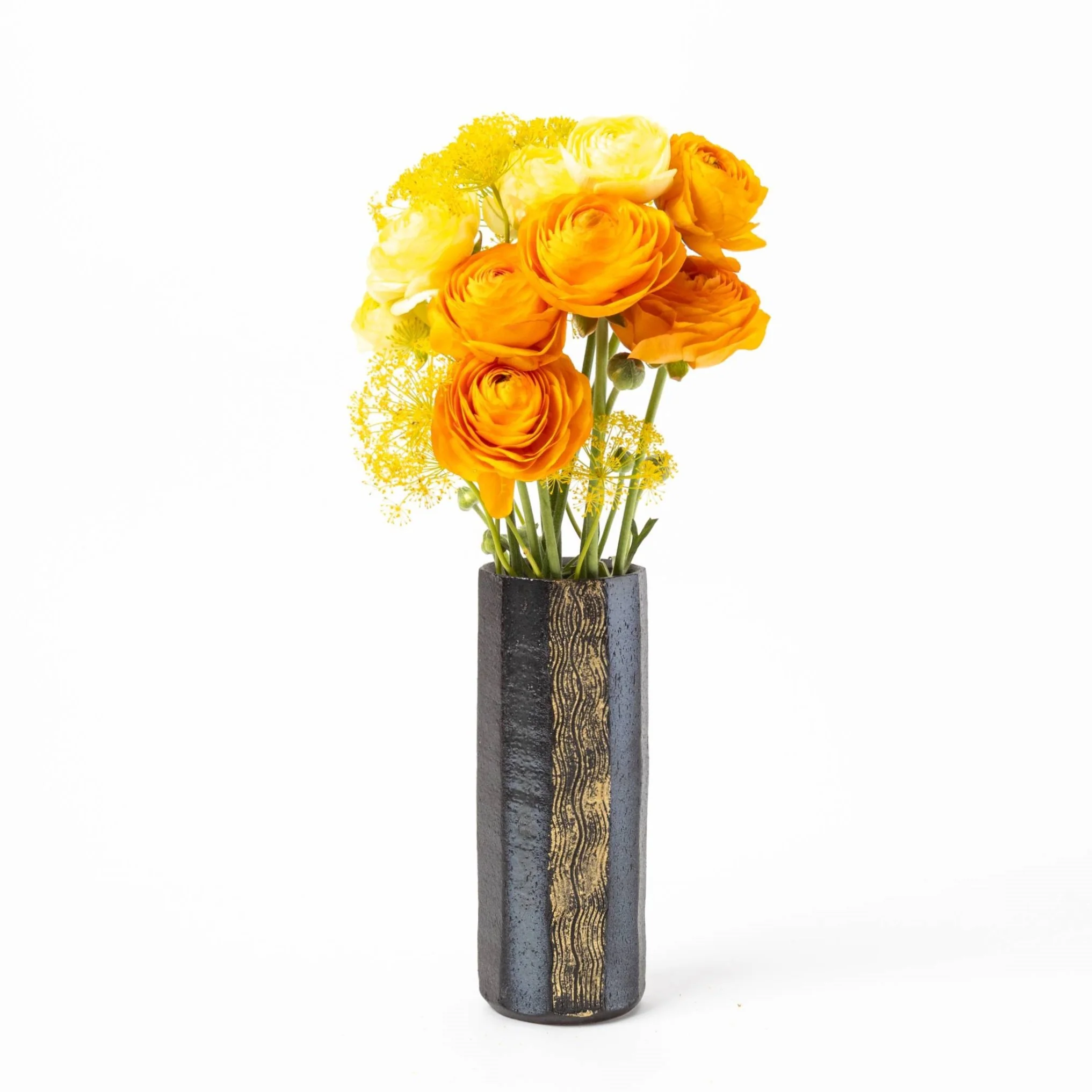
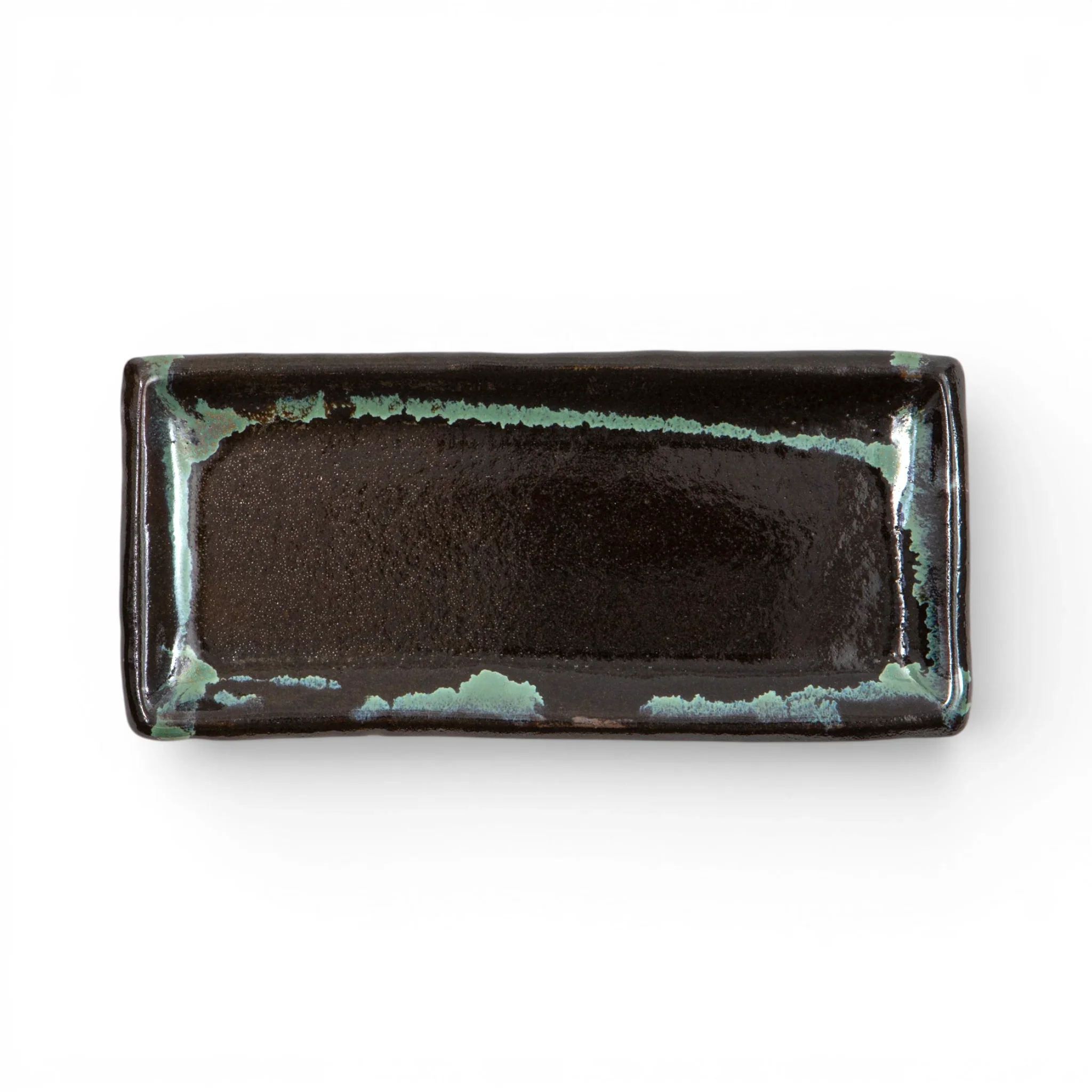
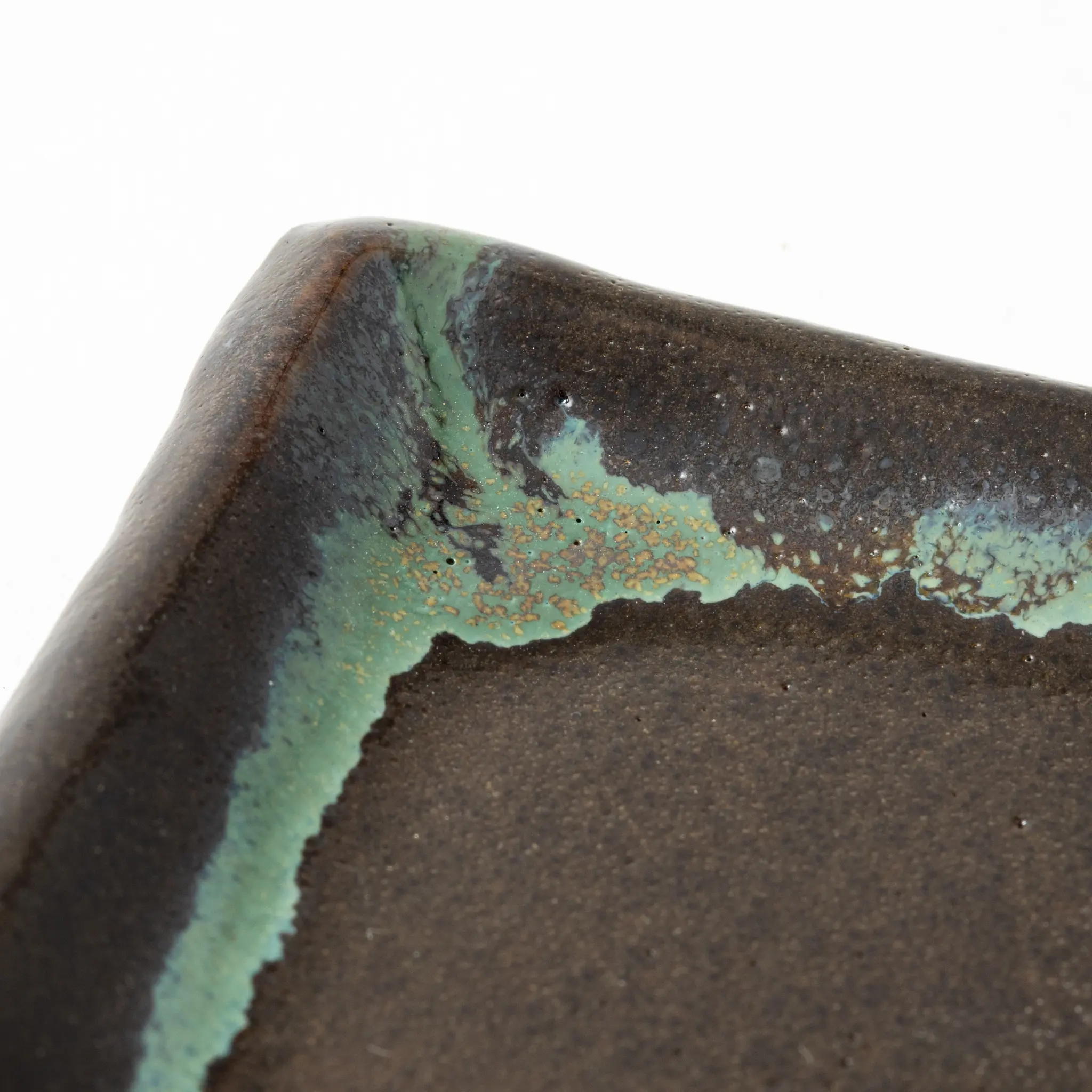
Black Satsuma is what Ryumonji has produced since 1688, and the kuro glaze is its most direct expression. The iron-rich clay of Kagoshima's mountains fires to a deep, near-opaque black under high heat — a color that comes from the material itself rather than pigment applied over a neutral body. The glaze is collected locally, processed within the workshop, and applied to a clay sourced the same way. Where the sansai glaze distributes three colors across the surface, the black glaze asserts one: a dense, reflective field that holds depth rather than pattern. Teal accumulates along the rim and corners where the secondary glaze pools and breaks during firing, the contrast appearing differently on each piece depending on its position within the ascending kiln. The rectangular form is the same as the sansai version — low, with a gently raised rim. What changes is the presence the glaze brings to the table. Black Satsuma was historically made for daily use, and this plate carries that directness.
Details & Craftsmanship
Every detail has been carefully considered to bring you the perfect product.

Details & Craftsmanship
Every detail has been carefully considered to bring you the perfect product.

Details & Craftsmanship
Every detail has been carefully considered to bring you the perfect product.
Description
Black Satsuma is what Ryumonji has produced since 1688, and the kuro glaze is its most direct expression. The iron-rich clay of Kagoshima's mountains fires to a deep, near-opaque black under high heat — a color that comes from the material itself rather than pigment applied over a neutral body. The glaze is collected locally, processed within the workshop, and applied to a clay sourced the same way. Where the sansai glaze distributes three colors across the surface, the black glaze asserts one: a dense, reflective field that holds depth rather than pattern. Teal accumulates along the rim and corners where the secondary glaze pools and breaks during firing, the contrast appearing differently on each piece depending on its position within the ascending kiln. The rectangular form is the same as the sansai version — low, with a gently raised rim. What changes is the presence the glaze brings to the table. Black Satsuma was historically made for daily use, and this plate carries that directness.